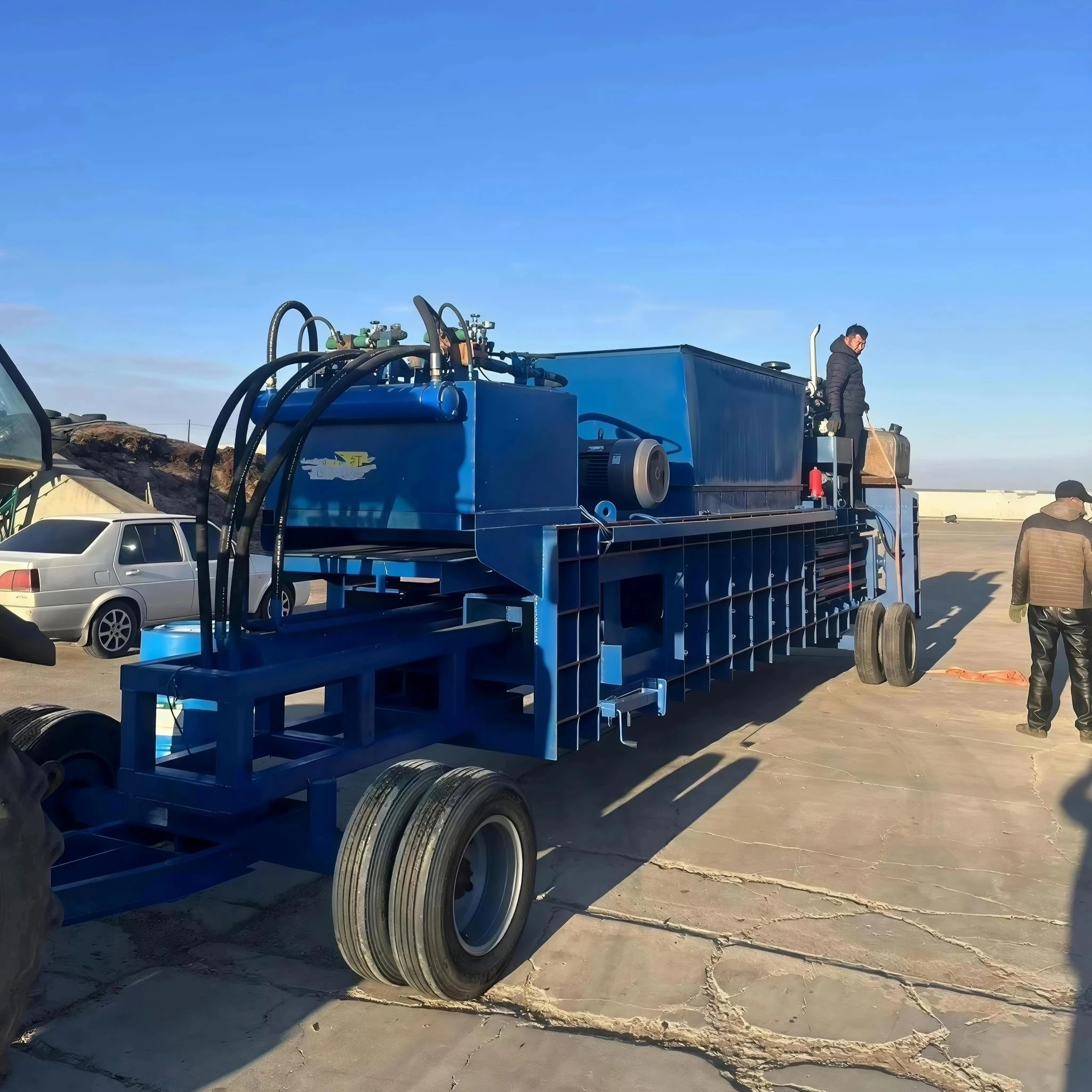
In the agricultural sector, straw—including wheat straw, corn stalks, rice straw, and cotton stalks—is a abundant byproduct, but its loose, bulky nature makes storage, transportation, and recycling a major challenge for farmers, agricultural cooperatives, and biomass energy plants. Burning straw not only pollutes the environment but also wastes valuable renewable resources. To solve this pain point, a leading agricultural cooperative in Punjab, India (a region known as the “food bowl” with massive paddy and wheat straw output) reached out to us for a custom horizontal hydraulic baler for straw compression. This case study details how our tailored solution helped them transform loose straw into high-value, easy-to-handle bales, reduce costs, and achieve environmental sustainability—proving why our custom straw compression equipment is the top choice for agricultural businesses worldwide.
Client Background & Pain Points
Our client is a large-scale agricultural cooperative in Punjab, India, managing over 5,000 hectares of farmland, with annual straw output exceeding 12,000 tons (mainly wheat straw and paddy straw). As one of the regions with the highest straw production in Asia, Punjab faces severe challenges in straw management: loose straw occupies massive storage space, transportation costs are prohibitively high, and on-farm straw burning (a common disposal method) leads to air pollution and government penalties. Before cooperating with us, the client tried general-purpose horizontal balers but encountered insurmountable issues:
-
General balers failed to handle wet straw (moisture content 55-65%), often causing jams and low productivity—critical for Punjab’s humid post-harvest season.
-
Standard bale sizes (too large or too small) were incompatible with the client’s storage facilities and transportation vehicles, leading to inefficient stacking and increased logistics costs.
-
The balers lacked customized feeding systems, requiring 8-10 workers to manually feed straw, resulting in high labor costs and low processing efficiency (only 2-3 tons per hour).
-
Bales produced were not dense enough (density < 300 kg/m³), leading to easy scattering during transportation and low acceptance from biomass power plants and animal feed manufacturers.
After researching global hydraulic machinery manufacturers, the client chose us for our expertise in custom straw compression equipment and proven track record in agricultural waste management. Their core demand: a tailor-made horizontal hydraulic baler that could handle high-moisture straw, produce customized bale sizes, reduce labor costs, and ensure dense, stable bales for easy storage and sale.
Custom Solution: Tailored Horizontal Hydraulic Baler for Straw Compression
Based on the client’s specific needs and on-site conditions, our R&D team designed a custom horizontal hydraulic baler dedicated to straw compression, integrating advanced hydraulic technology, customized feeding systems, and intelligent control—all optimized for wheat straw, corn stalks, and paddy straw. Here are the key customized features and technical parameters:
1. Customized Compression System for High-Moisture Straw
To solve the problem of wet straw jamming, we upgraded the compression chamber with anti-stick, wear-resistant steel plates and adjusted the hydraulic ram design to apply gradual, uniform pressure (80 tons of compression force). This ensures that straw with 55-65% moisture content is compressed smoothly without jamming, while achieving a bale density of 450-500 kg/m³—meeting the standards of biomass power plants and feed manufacturers. The hydraulic system uses branded components (Bosch/Rexroth) with a water cooling system to prevent overheating during continuous operation, ensuring stable performance even in high-temperature environments.
2. Custom Bale Size & Shape
Based on the client’s storage space (warehouse height 3.2m) and transportation vehicles (standard 10-ton trucks), we customized the bale size to 1200mm (width) × 950mm (height) × adjustable length (1000-1500mm), with a bale weight of 350-400 kg. This size allows for 18-20 bales per truck load (vs. 8-10 bales with standard balers), reducing transportation costs by 40%. The rectangular bale design ensures stable stacking, maximizing storage space utilization by 60% compared to loose straw.
3. Automatic Feeding System for Labor Savings
We installed a customized conveyor feeding system (length 5m, width 0.8m) with an adjustable speed (0-5m/min) to match the client’s straw output. The system automatically feeds loose straw into the compression chamber, eliminating the need for manual feeding and reducing the labor requirement from 8-10 workers to 2-3. The conveyor is equipped with an auto-stop function when the chamber is full, preventing overloading and equipment damage—further improving operational safety and efficiency.
4. Intelligent PLC Control & Easy Maintenance
The baler is equipped with a user-friendly PLC control system, allowing operators to adjust compression force, bale size, and feeding speed with simple button operations—no professional technical training required. We also added a self-diagnostic function that alerts operators to potential issues (e.g., oil leaks, jammed straw) in real time, minimizing downtime. For easy maintenance, we designed the machine with detachable panels and centralized lubrication points, reducing maintenance time by 50% compared to standard balers.
Key Technical Parameters of the Custom Straw Baler
|
Parameter
|
Custom Specification
|
|---|---|
|
Machine Type
|
Custom Horizontal Hydraulic Baler for Straw Compression
|
|
Compression Force
|
80 Tons
|
|
Processing Capacity
|
8-10 Tons per Hour (Dry Straw); 3.5-4.8 Tons per Hour (Wet Straw)
|
|
Bale Size
|
1200mm × 950mm × 1000-1500mm (Customizable)
|
|
Bale Weight
|
350-400 kg
|
|
Moisture Tolerance
|
14-65% (Suitable for Dry & Wet Straw)
|
|
Power
|
37 KW (Three-Phase Motor); Optional Diesel Engine for No-Power Areas
|
|
Control System
|
PLC Intelligent Control (Semi-Automatic/Fully Automatic Optional)
|
|
Certifications
|
CE, ISO 9001
|
Implementation & Remarkable Results
After 25 days of production and customization, we delivered the baler to the client’s facility in Punjab, providing on-site installation, operator training, and technical guidance. The machine was put into operation in October 2025 (post-harvest season), and after 6 months of continuous use, the client achieved remarkable results that exceeded their expectations:
1. Cost Reduction: 40% Lower Transportation & Labor Costs
The customized bale size and density reduced transportation costs by 40%—from $120 per ton of loose straw to $72 per ton of baled straw. The automatic feeding system cut labor costs by 75%, saving the client $8,000-10,000 per month. Additionally, the baler’s low maintenance design reduced maintenance costs by 50%, further improving cost efficiency.
2. Efficiency Improvement: 3x Higher Processing Capacity
The custom baler processes 8-10 tons of dry straw per hour (3x higher than the client’s previous general-purpose baler), handling the entire annual straw output (12,000 tons) in just 15-20 days—compared to 45-60 days before. This allowed the client to complete straw processing quickly after harvest, avoiding delays in subsequent planting and reducing storage pressure.
3. Revenue Increase: Turning Straw Waste into Profitable Resources
The dense, uniform bales produced by our custom baler are highly sought after by biomass power plants and animal feed manufacturers. The client now sells baled straw at $180 per ton (vs. $120 per ton for loose straw), increasing revenue by $72,000 annually. They also use part of the baled straw for silage, reducing animal feed costs by 20%—creating multiple income streams from agricultural waste.
4. Environmental Compliance & Sustainability
By compressing and recycling straw, the client eliminated on-farm straw burning, complying with local environmental regulations and avoiding government penalties. The baler also helps reduce carbon emissions by 1,500+ tons annually, enhancing the client’s brand reputation as an eco-conscious agricultural enterprise. This aligns with global trends toward sustainable agriculture and biomass resource utilization.
5. Long-Term Reliability & Low Downtime
The custom baler has been operating continuously for 6 months with a downtime rate of less than 2%—thanks to its high-quality steel structure, branded hydraulic components, and intelligent self-diagnostic system. The client’s operation manager commented: “This custom horizontal hydraulic baler is tailored perfectly to our straw processing needs. It’s easy to operate, efficient, and reliable—solving our biggest pain points and helping us turn waste into profit.”
Why Choose Our Custom Horizontal Hydraulic Baler for Straw Compression?
This success case is just one example of how our custom horizontal hydraulic balers for straw compression help agricultural businesses solve their unique challenges. As a professional hydraulic machinery manufacturer based in Jining, Shandong, China (a leading agricultural machinery industrial cluster), we have the expertise and experience to design tailored solutions for any straw type, processing volume, and operational need. Here’s why we are the trusted partner for global agricultural clients:
-
Full Customization Capability: We tailor every aspect of the baler—compression force, bale size, feeding system, control system, and power source—to your specific needs, ensuring the machine fits your on-site conditions and workflow perfectly. We also offer OEM/ODM services, including logo customization and color matching.
-
Specialized for Straw Compression: Our balers are optimized for all types of straw (wheat, corn, rice, cotton) and can handle wet or dry straw (moisture content 14-65%), avoiding jams and ensuring high efficiency. We integrate anti-stick and wear-resistant components to extend the machine’s service life.
-
High Quality & Durability: All custom balers are made with high-strength steel, branded hydraulic components, and undergo 72-hour full-load testing to ensure reliability. We provide a 1-year整机 warranty and 3-year warranty for core components, with 24/7 technical support.
-
Cost-Effective & Fast ROI: Our custom solutions help you reduce labor, transportation, and maintenance costs while increasing revenue from straw recycling—with a typical return on investment (ROI) of 6-12 months, as demonstrated by our Punjab client.
-
Convenient Logistics & After-Sales Service: Based in Shandong, we have convenient access to Qingdao and Tianjin ports, ensuring timely delivery to global clients. We provide on-site installation, training, and maintenance services, minimizing downtime and ensuring your machine runs smoothly.
Client Testimonial
“We struggled with straw management for years—loose straw took up too much space, transportation was expensive, and burning led to penalties. The custom horizontal hydraulic baler from your company changed everything. It handles our wet paddy straw without jamming, produces bales that fit our trucks and warehouses, and cuts our labor costs drastically. We now sell baled straw for a higher price and have turned a waste product into a profitable resource. Your team’s expertise and after-sales support are exceptional—we highly recommend your custom straw compression solutions to any agricultural business facing similar challenges.”— Rajesh Kumar, Operation Manager of the Punjab Agricultural Cooperative
Final Thoughts
Straw management doesn’t have to be a burden—with the right custom horizontal hydraulic baler for straw compression, you can turn loose straw into a valuable asset, reduce costs, and achieve environmental sustainability. Whether you’re a small farm, large agricultural cooperative, or biomass energy plant, our tailored solutions are designed to meet your unique needs and help you maximize profitability.
If you’re facing challenges with straw storage, transportation, or recycling, contact us today. Our R&D team will work with you to design a custom horizontal hydraulic baler that fits your specific requirements—helping you transform agricultural waste into profit, just like our client in Punjab.