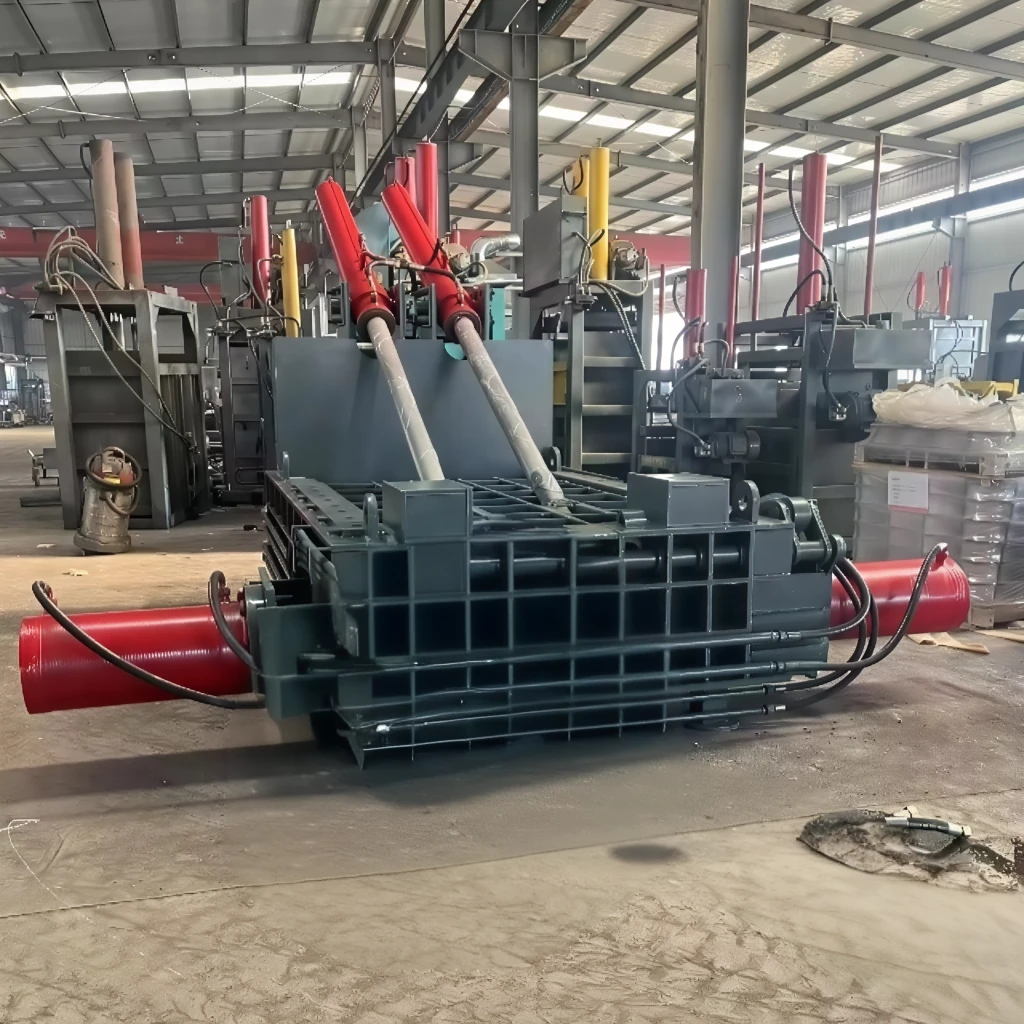
Horizontal Hydraulic Baler Buying Guide | Types, Capacity, Configurations, Selection Tips
For recycling plants, material recovery facilities (MRF), distribution warehouses, paper mills and plastic recycling lines, a horizontal hydraulic baler is the core equipment to compress loose waste into high-density bales, cut storage space, reduce freight cost and raise scrap resale value. Many buyers struggle to match the right baler model with their raw material, hourly output requirement, workshop layout and budget. This professional buying guide covers baler types, throughput calculation, core configurations and critical selection criteria to help you avoid wrong investment.
1. Main Types of Horizontal Hydraulic Balers
Horizontal balers are generally split into semi-automatic horizontal balers and fully automatic auto-tie horizontal balers.
- Semi-Automatic Horizontal Hydraulic Baler Semi-auto balers adopt hydraulic compression with manual wire tying after bale ejection. Lower upfront investment, simple structure, easy maintenance. Suitable for medium-volume waste paper, cardboard, plastic films and textiles. Typical throughput: 2–6 tons per hour. It is widely used by small & medium recycling yards.[View detailed model parameters of semi-automatic horizontal hydraulic balers]
- Fully Automatic Auto-Tie Horizontal Baler Auto-tie balers run continuous feeding, automatic compression, automatic wire tying and auto bale discharge, controlled by PLC. Conveyor feeding is standard. High continuous throughput, stable bale weight, minimal labor intervention. Output ranges from 6 t/h up to 20+ t/h. Preferred for large MRF, PET bottle recycling lines, high-volume OCC cardboard recycling projects.[View detailed model parameters of fully automatic horizontal hydraulic balers]
Extra category: Side push horizontal baler, mainly for light scrap metal, aluminum cans, light steel chips. Higher compression tonnage, high bale density for metal recycling.
2. Core Index: Throughput, Compression Force & Bale Specifications
These three indicators are the first filters for model selection.
- Compression Force (Tonnage): 60T / 80T / 100T / 120T / 160T / 180T/ 200T Light materials (cardboard, film): 60–100 ton is common. PET bottles, hard plastic: ≥100T. Light scrap metal: 120–200 ton. Higher tonnage delivers heavier, denser bales, which lowers shipping cost per ton.
- Throughput (Capacity, ton/hour) Throughput depends on material type, feeding method, cycle time and bale size.
- Semi-auto: 2–6 TPH
- Auto-tie: 6–20+ TPH
Note: Nominal throughput is tested under standard OCC cardboard conditions; fluffy PET, film will reduce actual output.
- Bale Size & Bale Weight Customizable bale chamber: common 1100×800mm, 1200×1000mm. Bale weight ranges 300kg–1200kg. Match bale dimension to container loading standard (20GP /40GP container).
3. Key Configuration Options
When comparing suppliers, focus on these configurable parts, which decide service life and failure rate:
- Hydraulic System: Brand hydraulic pump, high-pressure cylinder, oil cooling system (air cooling / water cooling). Continuous auto-tie balers must install oil cooler to prevent hydraulic overheating.
- Control System: PLC + touch screen, fault alarm, cycle parameter adjustable. Siemens / Mitsubishi brand components are popular for stable operation.
- Feeding Structure: Hopper only, or matched belt conveyor, shredder pre-feeding system for messy, fluffy materials.
- Wiring & Tying System: Manual tie / single wire auto tie / double wire auto tie.
- Body Material: Wear-resistant manganese steel liner inside compression chamber. This is a big difference between cheap low-end machines and heavy-duty industrial balers.
- Power Supply & Voltage: Custom 380V / 415V / 440V, 50Hz /60Hz for different countries.
4. Material Matching Table (Most Important Selection Rule)
- Old Corrugated Cardboard (OCC), waste paper: Semi-auto or auto-tie horizontal baler, 60–100T
- PET plastic bottles: Fully automatic auto-tie baler, ≥100T, pre-crushing conveyor recommended
- Plastic film, PP woven bags: Low compression resistance, pay attention to anti-winding structure
- Textile, used clothing: Special textile horizontal baler, larger feeding inlet
- Aluminum cans, light scrap metal: Side push horizontal metal baler, high tonnage
5. Selection Checklist & Key Buying Points
Before confirming your order, go through this checklist:
- Confirm your actual hourly waste volume, not peak one-time stock.
- Confirm material type, moisture content, impurity proportion. Wet paper / contaminated plastic reduces bale density heavily.
- Measure workshop space: horizontal baler needs longer floor space than vertical balers, reserve space for conveyor and bale stacking.
- Power condition: Check local industrial voltage and transformer capacity.
- Bale market requirement: Local recyclers or export buyers have fixed bale weight & density requirements.
- Spare parts availability and local after-sales support, warranty period.
- Compare total cost of ownership: not only machine price, but power consumption, wearing parts replacement and labor cost.
6. Horizontal vs Vertical Baler Quick Comparison
Vertical balers are low cost, small footprint, low output, fully manual feeding & tying, suitable for less than 1 ton per hour. Horizontal hydraulic balers support continuous feeding, high throughput, stable bales for export recycling business. If your daily waste exceeds 8 tons, horizontal baler is the better long-term solution.
FAQ
Q1: How long is the baler service life?
With regular maintenance, heavy-duty horizontal balers can run 8–12 years. Core wearing parts: liner plates, seals, tying needles.
Q2: Can I change bale size after purchase?
Bale chamber is fixed. Bale dimension must be confirmed before manufacturing.
Q3: Is auto-tie baler worth the extra cost?
If labor cost is high and you run 2-shift continuous production, auto-tie brings obvious ROI within 1–2 years.
Conclusion
Selecting a suitable horizontal hydraulic baler is not only choosing tonnage or price, but matching throughput, compression power, automation grade and configurations to your waste stream and business target. Contact our engineering team for customized layout drawing and capacity calculation for your recycling project.